Elite marathoners don’t just train harder—they run smarter. And one of the most decisive advantages isn’t in their lungs or legs, but under their feet. The shoes that helped shatter world records weigh less than a bar of soap. That’s not marketing hyperbole. It’s engineering reality.
These aren’t ordinary running shoes. They’re precision instruments designed to maximize energy return, minimize weight, and exploit the boundaries of athletic technology. And since their debut on the world stage, they’ve sparked debates about fairness, innovation, and the future of distance running.
The Weight That Changed Everything
A standard bar of soap weighs between 90 and 120 grams. For decades, elite marathon shoes hovered around 250–300 grams—functional, durable, but far from revolutionary. Then came the next-gen racers: sub-200 grams, then sub-170, and finally, models dipping below 140 grams.
The breakthrough came not from removing material for the sake of lightness, but by rethinking the entire architecture. Designers replaced traditional midsoles with ultra-light, resilient foams. They integrated carbon fiber plates to act as springs. And they stripped away anything non-essential—eyelets, overlays, even excess cushioning in non-load zones.
Example: The Nike Alphafly NEXT% 2, worn by Eliud Kipchoge during his record-breaking performances, clocks in at approximately 188 grams for a men’s size 9. Later iterations and prototypes pushed even lower, with some tested models reaching 135–140 grams—lighter than a standard hotel soap bar.
How "Lighter Than a Bar of Soap" Translates to Speed
Reducing shoe weight isn’t just about feeling nimble. It’s about reducing energy cost over 42.195 kilometers. Research from the Journal of Applied Physiology shows that every 100 grams added per shoe increases oxygen consumption by about 1%. That may sound minimal—but over 26.2 miles, it accumulates.
Real-world impact: - A 200-gram shoe adds roughly 2% more metabolic load than a 100-gram shoe. - Over a two-hour marathon, that can mean the difference between 2:01 and 2:04—or missing a record by seconds. - Lighter shoes also reduce leg fatigue, especially in the calf and Achilles, allowing runners to maintain turnover in the final kilometers.
Elite coaches refer to this as “marginal gains in motion.” When everything from stride efficiency to glycogen utilization is optimized, footwear weight becomes a multiplier. Shaving 50 grams off a shoe can be worth more than months of strength training in certain race scenarios.
The Science of Foam and Plates
The magic isn’t just in the weight. It’s in what delivers performance at that weight.
Modern record-shattering shoes rely on two core innovations:
- Ultra-resilient foam compounds
- - Materials like Nike’s ZoomX, Adidas’ Lightstrike Pro, and Puma’s Nitro Elite offer 85%+ energy return—meaning most of the energy from each footstrike is bounced back into propulsion.
- - These foams are also significantly lighter than traditional EVA, enabling thick midsoles without the bulk.
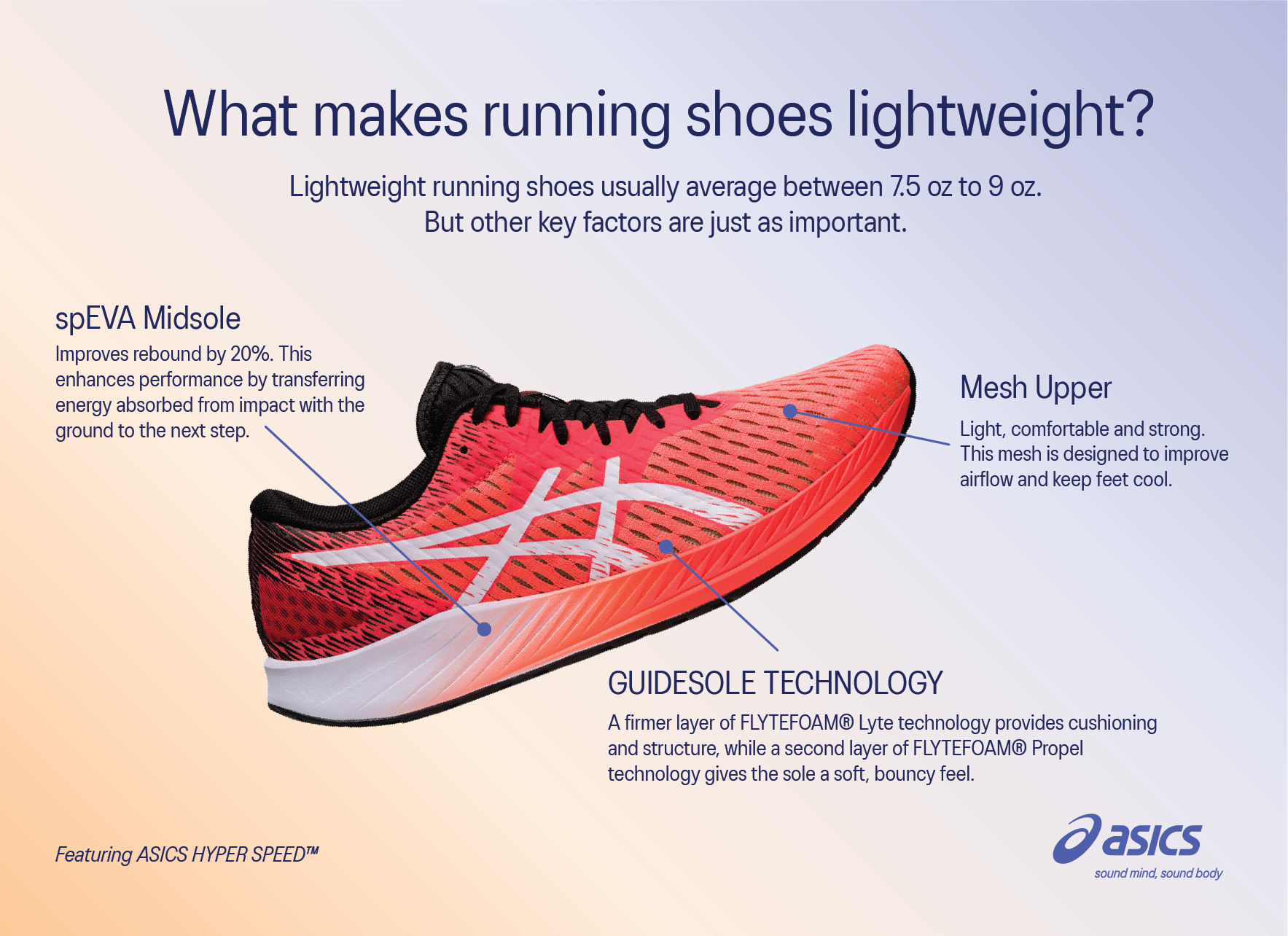
- Carbon fiber propulsion plates
- - Rigid, curved plates embedded in the midsole act like leaf springs.
- - They stabilize the foot, reduce ankle strain, and create a “roll-through” effect that enhances stride efficiency.
- - Combined with a rocker geometry, they help shorten ground contact time—critical in maintaining pace late in the race.
Nike Alphafly: The Shoe That Broke the Mold
No discussion of lightweight record-breakers is complete without the Nike Alphafly. It debuted in 2019 during the INEOS 1:59 Challenge, where Eliud Kipchoge became the first person to run a sub-two-hour marathon (unofficially). While not an official world record due to pacing and course conditions, it proved what was possible.
Key features of the Alphafly:
- Dual-stack ZoomX foam for maximum cushioning and bounce
- Full-length carbon plate with two embedded Zoom Air pods in the forefoot
- Aerodynamic upper made from engineered mesh
- Weight: ~188 grams (size 9), with prototypes tested below 150 grams
The Alphafly wasn’t just fast—it was controversial. Critics argued it provided an unfair mechanical advantage, blurring the line between athlete and technology. World Athletics responded by limiting sole thickness (40mm max) and restricting multiple embedded plates in competition shoes.
Yet, the shoe’s legacy is undeniable. It catalyzed a tech race among brands and set a new benchmark: performance shoes must now be both ultra-light and energy-amplifying.
Beyond Nike: The Competitive Landscape
While Nike dominates headlines, other brands have entered the lightweight elite space with aggressive designs. Here's a look at the top performers pushing the limits of weight and efficiency:
| Brand & Model | Weight (size 9) | Key Technology | Record Use Case |
|---|---|---|---|
| Nike Alphafly NEXT% 3 | 188g | ZoomX foam, dual carbon plate, Air pods | Kipchoge’s Berlin 2022 (2:01:09) |
| Adidas Adizero Adios Pro 3 | 198g | Lightstrike Pro, dual carbon rods | Multiple sub-2:03 marathon finishes |
| Saucony Endorphin Pro 3 | 205g | PWRRUN HG foam, carbon plate | American record attempts |
| Puma Deviate Nitro Elite 2 | 192g | Nitro Elite foam, dual carbon plates | Competitive elite circuit |
| Asics Metaspeed Sky+ | 195g | FF Blast+ Turbo, carbon plate | Tokyo Marathon top-10 finishes |
Limitations to consider: - Ultra-light shoes are not built for daily training. Durability is sacrificed for performance. - The steep price tag (often $250+) puts them out of reach for casual runners. - The aggressive rocker and stiff plate require strong calves and adaptability—using them without transition can lead to injury.
Why "Lighter Than a Bar of Soap" Matters for Non-Elites
You don’t need to be aiming for 2:01 to benefit from advancements in lightweight marathon footwear. Recreational runners are seeing trickle-down effects:
- Faster training shoes: Models like the Saucony Endorphin Speed 4 blend lightweight performance with durability, ideal for tempo runs.
- Improved confidence: Lighter shoes create a psychological edge—feeling fast can help you run fast.
- Injury reduction: The rocker design promotes smooth heel-to-toe transitions, reducing strain on joints over long distances.

Common mistake: Jumping straight into race-day shoes for long runs. Many amateurs buy record-breaking models and wear them for 18-mile long runs—only to suffer calf tightness or plantar pain. The solution? Gradual integration. Use them for speed work first. Build up to 8–10 miles before full marathon distance.
The Future: What’s Next After the Soap-Bar Benchmark?
Now that shoes are lighter than soap, what’s the next frontier?
- Customizable midsoles: 3D-printed foams tuned to individual biomechanics.
- Smart integration: Embedded sensors to monitor fatigue, gait, and efficiency in real time.
- Sustainable lightweighting: Using plant-based foams and recyclable carbon alternatives without sacrificing performance.
Brands are already testing sub-130g prototypes—approaching the weight of a tennis ball. But engineers face trade-offs: too light, and the shoe loses cushioning and protection. The future isn’t just about weight. It’s about intelligent weight—removing mass where it doesn’t help, adding resilience where it matters.
Training with Technology: A Pro Workflow
Elite athletes don’t just wear these shoes—they strategize around them. Here’s how top runners integrate lightweight racers:
- Weeks 1–8: Use durable trainers (300g+) for base mileage.
- Weeks 9–12: Introduce lightweight racers in interval sessions (e.g., 6 x 1K at marathon pace).
- Taper phase: Run 10–12 miles in race shoes to acclimate.
- Race day: Fresh pair, pre-warmed, laced tight—maximizing energy return from mile one.
Pro tip: Store race shoes in a cool, dark place. ZoomX foam degrades with heat and UV exposure—losing resilience over time. Never use them on concrete during off-season; save the miles for race day.
Final Step: Choosing Your Edge
The shoes that are lighter than a bar of soap didn’t just break records—they redefined what’s possible. But technology alone won’t carry you to the finish line faster. It amplifies preparation.
If you’re serious about your marathon time, consider this: - Invest in a pair of lightweight racers for race day. - Train in them progressively. - Respect their limits—don’t treat a $250 carbon-plated shoe like a daily trainer.
The next record won’t just be broken by lungs and legs. It’ll be lifted by milligrams saved, joules returned, and every ounce of innovation underfoot.
FAQ
Are shoes lighter than a bar of soap comfortable for long distances? Yes, when designed properly. The combination of soft, resilient foam and biomechanical support makes them surprisingly comfortable at speed, though they require adaptation.
Can amateur runners use record-breaking marathon shoes? Absolutely. While optimized for elites, many models are accessible and beneficial for sub-3:30 marathoners aiming to improve.
Do lightweight racing shoes wear out quickly? Yes. Most are rated for 100–200 miles. They prioritize performance over durability, so reserve them for key workouts and races.
Why are these shoes so expensive? Advanced materials like ZoomX foam and carbon fiber plates, along with R&D costs, drive up production prices.
Are carbon plate shoes banned in marathons? No, but World Athletics enforces rules: sole thickness under 40mm and no more than one rigid embedded plate.
How do I transition to lightweight racing shoes safely? Start with short, fast runs. Gradually increase distance over 4–6 weeks while monitoring for calf or Achilles discomfort.
Do lighter shoes always mean faster times? Not automatically. They enhance efficiency, but only if matched to your biomechanics, fitness, and race strategy.
FAQ
What should you look for in Lighter Than a Bar of Soap: The Shoes That Shattered Marathon Records? Focus on relevance, practical value, and how well the solution matches real user intent.
Is Lighter Than a Bar of Soap: The Shoes That Shattered Marathon Records suitable for beginners? That depends on the workflow, but a clear step-by-step approach usually makes it easier to start.
How do you compare options around Lighter Than a Bar of Soap: The Shoes That Shattered Marathon Records? Compare features, trust signals, limitations, pricing, and ease of implementation.
What mistakes should you avoid? Avoid generic choices, weak validation, and decisions based only on marketing claims.
What is the next best step? Shortlist the most relevant options, validate them quickly, and refine from real-world results.